Neighbourhood culture
Dastak series
The Dastak series took cultural programmes into neighbourhoods across Delhi. A qawwali in Janakpuri drew people from surrounding areas and created a shared public moment across social and religious difference.
Department of Art, Culture & Languages · Government of Delhi
A framework for making art and culture part of everyday public life.
The question
The work examined culture as public infrastructure: something that needs local spaces, regular programmes, research, documentation, livelihood support and ways for people to participate. It set out a practical framework spanning neighbourhoods, institutions and the city.
The starting point
Public funding and major programmes were largely confined to central Delhi. The result was a cultural system shaped by a small institutional and social circle, with limited access for people living elsewhere in the city.
The task was larger than taking established programmes to new audiences. It required distributing resources, recognising different practices and giving communities a role in deciding what cultural life could look like locally.
Decentralised decisions
Communities could choose the forms that mattered to them, from popular music to community-specific traditional performance. Government created the structure and provided the funds; local participants influenced the programme.
Neighbourhood culture
The Dastak series took cultural programmes into neighbourhoods across Delhi. A qawwali in Janakpuri drew people from surrounding areas and created a shared public moment across social and religious difference.
Participation
A citywide talent initiative travelled to wards and invited residents to register and perform, giving people who rarely entered formal cultural venues a public stage close to home.
Recognition
Singers, hip-hop artists and street actors entered government-supported cultural programmes, widening the definition of artistic practice eligible for public recognition.
A moment from the field
A young mother from a conservative household entered a local talent event and danced in her own neighbourhood. She said she would never have been able to leave her mohalla to take part in a conventional talent show. The programme did more than bring an audience to an event. It made participation possible on familiar ground.
Policy vision
Culture can be organised as a continuing public system: accessible locally, open to different art forms and connected to daily life.
01 · Places
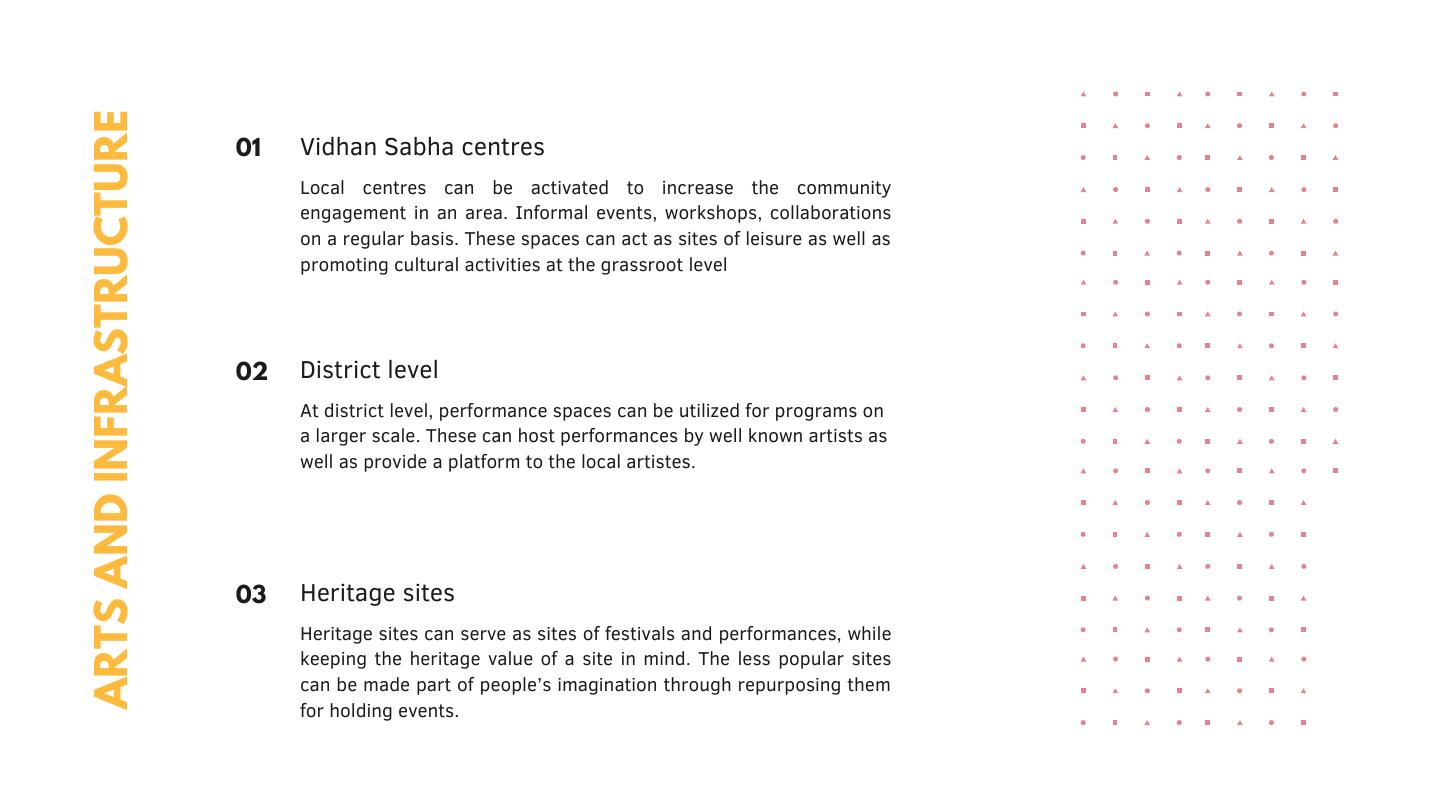
Activate spaces at several scales: local centres in constituencies, district venues, heritage sites and everyday public places. Metro stations, markets and parks can become settings for participatory cultural activity.
02 · Programmes
Move beyond one generic festival model. Programme for children, young people and senior citizens; connect art with science and environment; recognise the city’s many languages and food cultures; and create a Pan-Delhi public art festival.

03 · Memory
Conservation alone is not enough. Events, workshops and public programmes can keep monuments, artisan practices, songs, folklore and local knowledge alive in contemporary imagination.
04 · Knowledge
Grants, fellowships, seminars and accessible archives can support work in neglected and under-represented areas, including interdisciplinary research across art, science and technology.
05 · Learning
Expand long-term courses and create shorter points of entry. Support children and young people, women already making art at home, working artists and members of the public who want deeper engagement with the arts.
06 · Livelihood
Recognise the economic insecurity of cultural practice. Pensions, loans, fellowships, scholarships, production grants, travel support and funds for community art can widen who is able to sustain a practice.
07 · Reach
Combine newspapers, neighbourhood publicity, newsletters, radio, social media and a public website. Outreach should be timely, useful and shaped around the people a programme is intended to reach.
Missed-call publicity
A free missed-call service let residents subscribe to regular event updates. Communication became part of cultural infrastructure, alongside venues, funding and programming.
Urdu festival publicity
Festivals for Sanskrit, Hindi, Urdu, Punjabi and Maithili-Bhojpuri brought different audiences into Central Park through poetry, music and live performance.
Governing principle
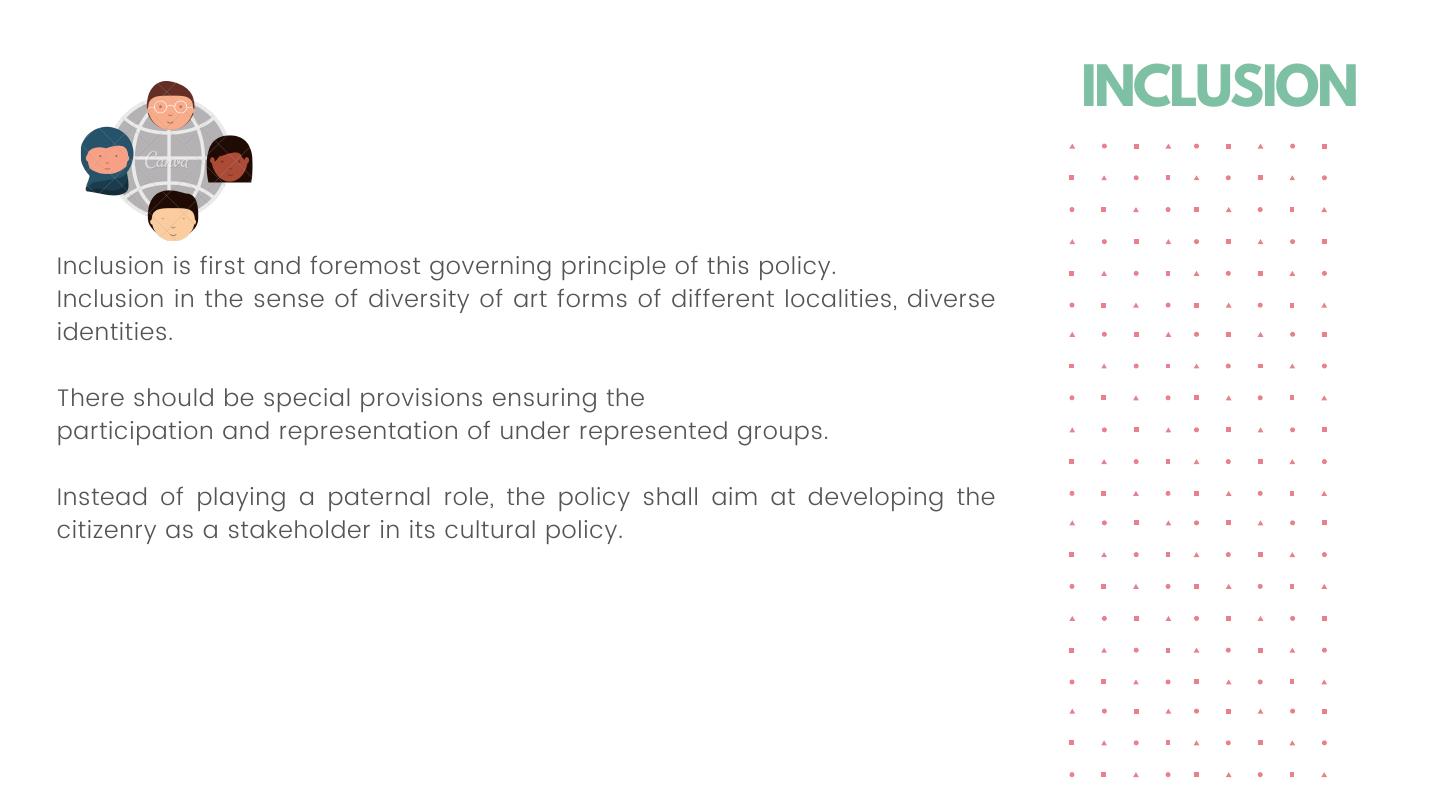
The policy treats citizens as stakeholders in cultural life, with deliberate space for under-represented groups and diverse art forms.
Behind the public programme
Review governing bodies, academy structures and vacancies.
Set priorities, timelines, operating procedures and resource requirements.
Build usable directories of artists, fellows and vendors.
Strengthen Delhi Archives, its website and public reach.
Develop regular design, media, radio and social communication.
Create routes for online participation and district-level cultural centres.
How the policy was developed
Pooja Sood · Ira Bhaskar · Manoj Bajpayee · Ashwani Kumar · Vineet Nagar · Beena Vyas · Abhinandita Dayal Mathur · Sohail Hashmi · Brin Desai · Aastha Chauhan · Javed Jaffrey · Latika Gupta
Approach
Policy research, strategic framing, programme architecture and communication connected institutional reform with neighbourhood access, cultural participation and long-term public value.