Senses
The immediate experience of the material world.
Delhi Government Schools · Education · Curriculum
Expanding public education to include attention, relationships, reflection and inner stability.
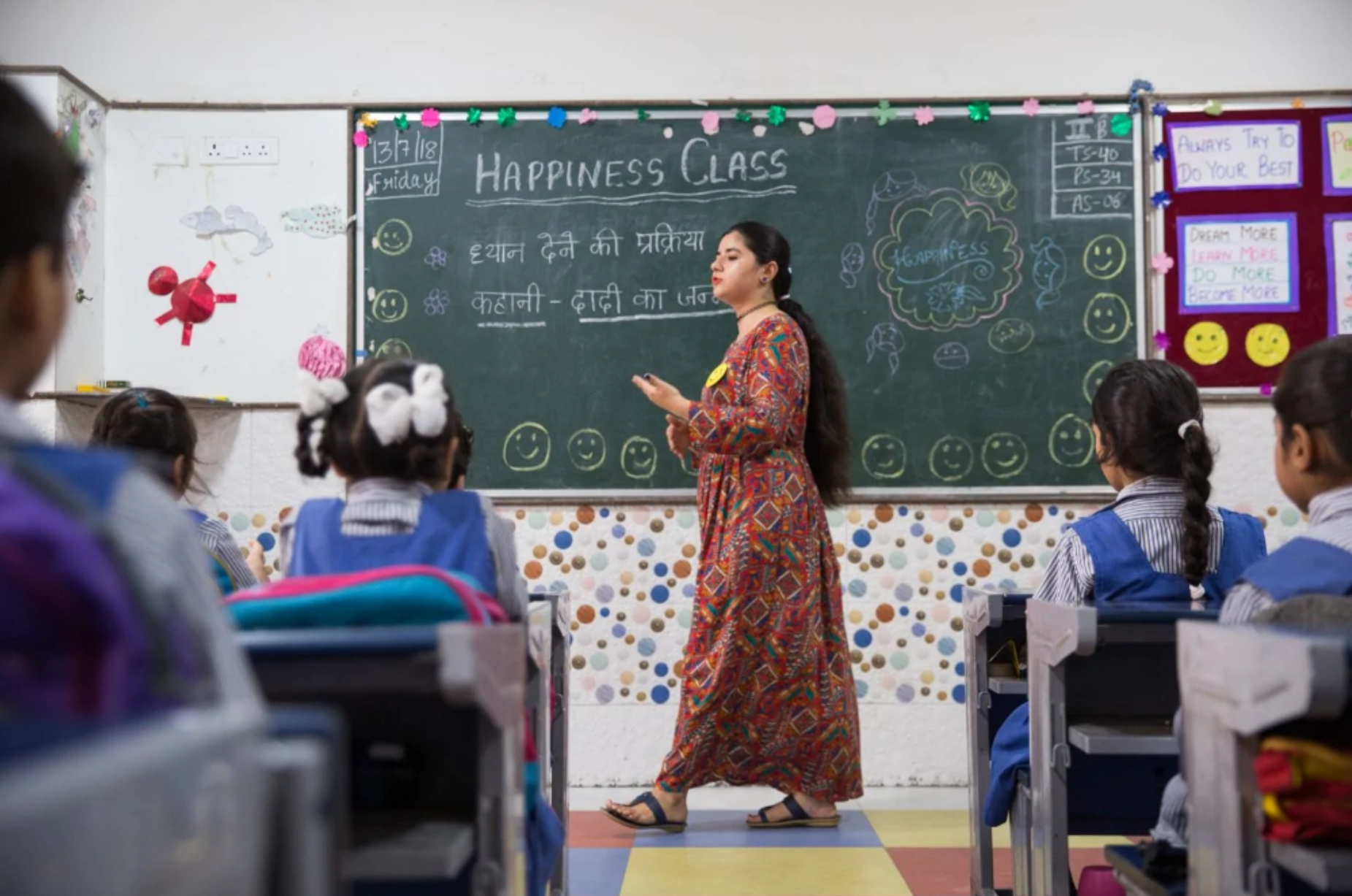
The premise
Education has greatly improved material well-being. Yet an education organised mainly around academic achievement and employability can leave children without the tools to understand themselves, their relationships or the nature of a fulfilling life.
Children are growing up amid fast-changing social and economic conditions and unfamiliar levels of stress. Literacy and numeracy remain essential. So do mindfulness, self-awareness, critical thinking, reflection and inner stability.
The foundation
The curriculum treats human living as an integrated experience of the material, behavioural, intellectual and experiential. These dimensions correspond to what we sense, how we relate, what we understand and what we become aware of.
Its purpose is to move beyond momentary pleasure towards deeper and more sustainable forms of happiness within the self, in relationships, in society and in nature.
A model for happiness
The immediate experience of the material world.
The feelings we express with ourselves, other people and our environment.
The understanding that changes behaviour and helps happiness endure.
In practice
The curriculum creates a stimulating environment for children from Nursery to Grade 8. It is part of the timetable and supported by structured teacher handbooks.
The aim is not to tell children what happiness means. It is to help them notice, question, experience and express it for themselves.
One story, two languages
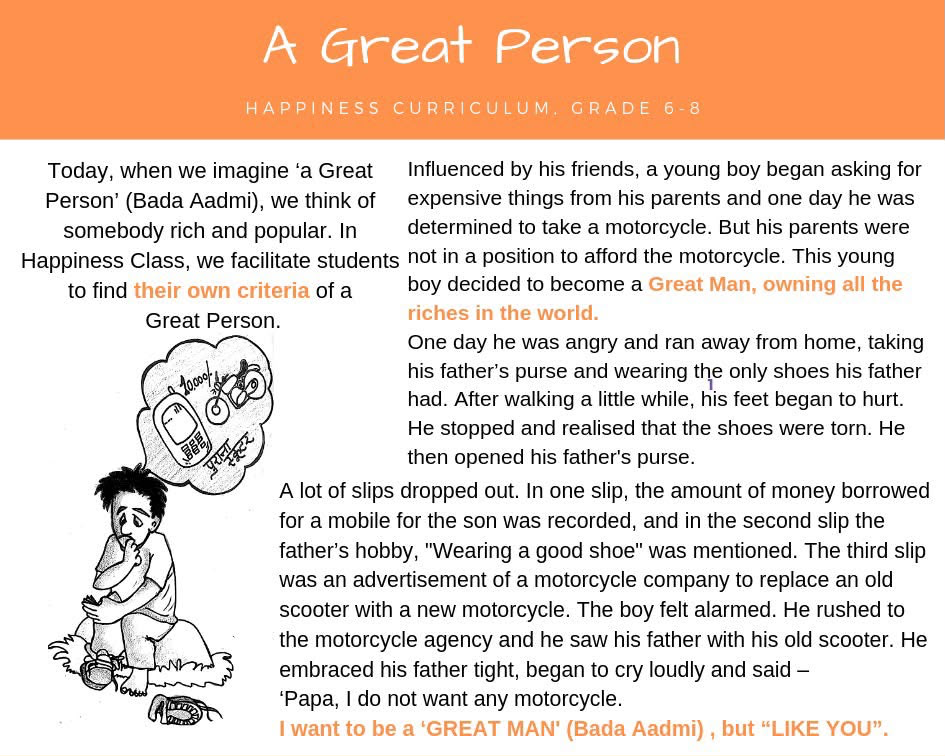
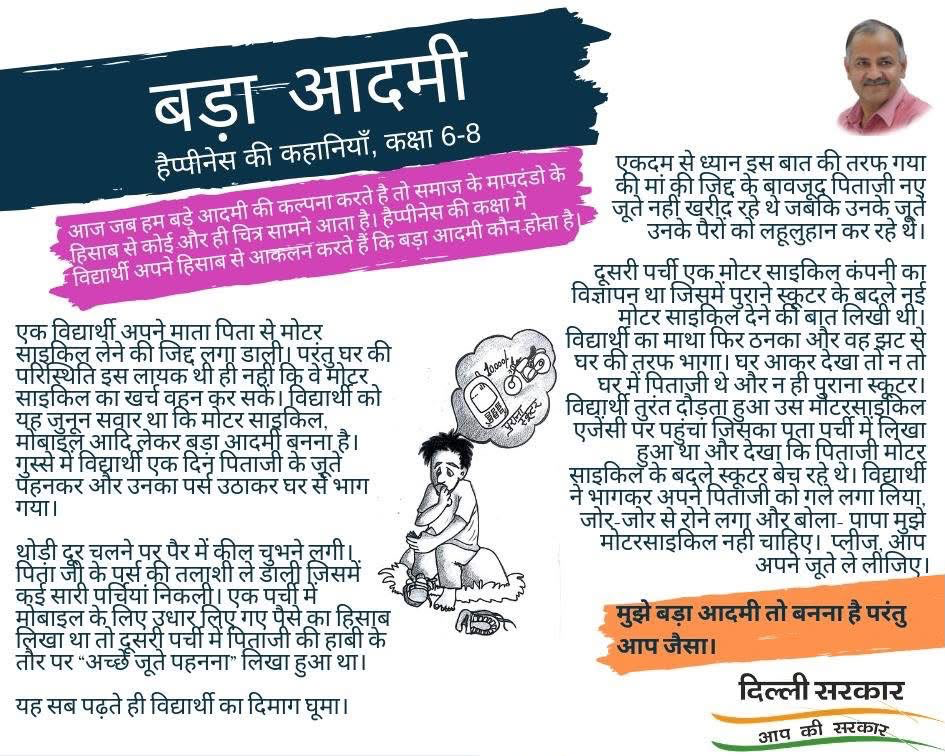
A classroom story asks children to reconsider the usual signs of success. Through a boy’s encounter with his father’s sacrifices, the lesson shifts the meaning of “greatness” from wealth and status towards care, gratitude and understanding.
Public communication
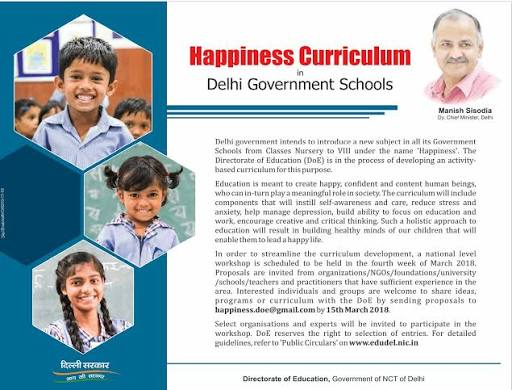
The work translated a new educational idea for parents, teachers and the wider public. It explained why happiness belonged within mainstream education, how the curriculum would work and what children would encounter each day.
From the classroom
Children began to speak about feelings with greater ease, listen to one another and connect classroom ideas with their lives at home.
Stories from classes brought student, teacher and parent voices into the record. These first-person accounts showed how a curriculum enters everyday school life: through pauses, conversations, observations and changes that cannot be reduced to a single score.
The Happiness Curriculum widened the purpose of public education. It placed attention, empathy, relationships and reflective inquiry inside the ordinary structure of the school day.