Abstract
The first challenge was immediate: reach people who were going hungry and falling outside existing relief channels. The next challenge was structural: turn emergency distribution into a six-month food-security plan that could support household recovery.
The emergency
Lockdown converted a public-health crisis into a livelihood and food crisis. Households faced simultaneous losses of income, work, mobility and secure housing. Cooked-food centres, ration systems and coupons reached many people, but gaps remained. Hunger SOS was developed to identify and respond to those gaps through a network of government teams, civil-society groups, food partners, volunteers and delivery systems.
The work required speed without abandoning accountability. Needs changed across the crisis: cooked meals were critical first; after lockdown was extended, dry ration became more useful for families managing a longer period of uncertainty.
Response system
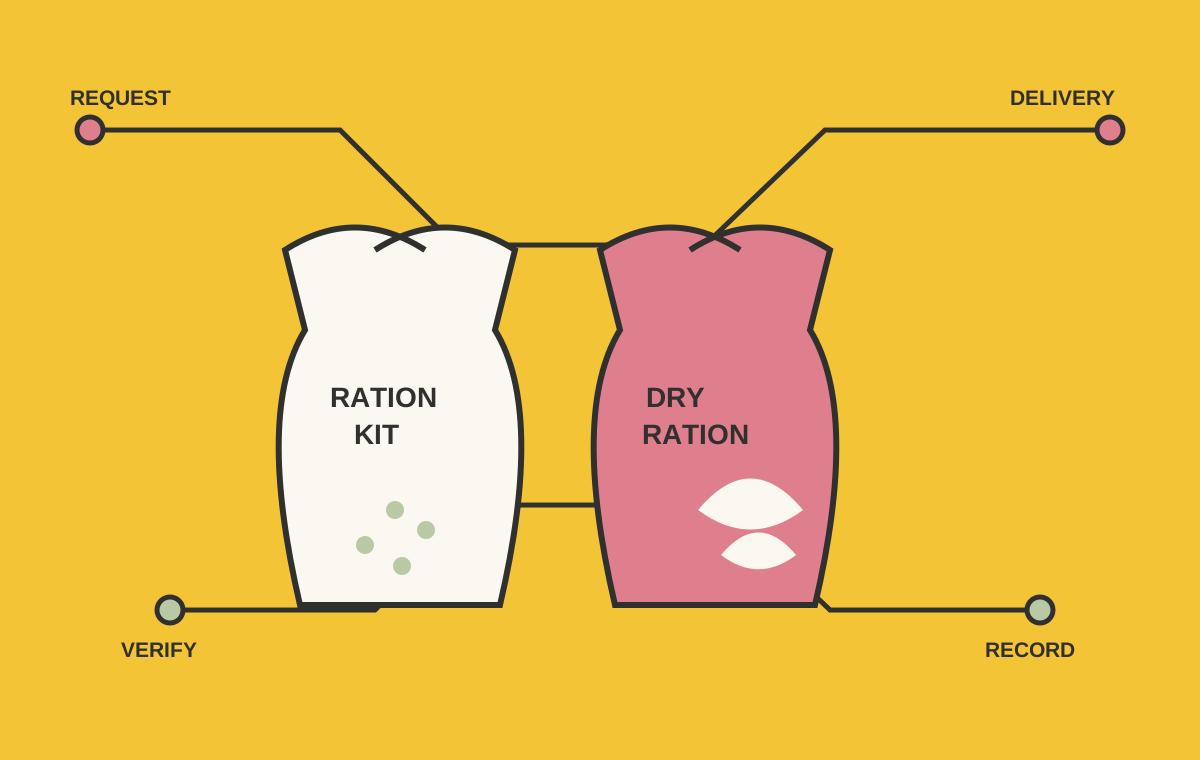
Receive
Capture SOS requests and identify those missed by existing channels.
Verify
Map location, household need and the nearest viable delivery route.
Coordinate
Match government, NGO, food and logistics partners.
Deliver
Provide cooked meals or family ration kits and record reach.
Simplified operating logic reconstructed from the supplied programme documents.
Documented scale
Food centres
Emergency centres were coordinated across Delhi during the first lockdown phase, serving large daily demand.
Families
Dry-ration support was documented over a three-week period through multiple partner organisations.
Months
The recovery proposal used six months as a planning horizon for adequate, affordable and assured food.
From relief to recovery
Food security was framed as a foundation for recovery. If a household could depend on food, scarce income could be directed to rent, medicine, health and rebuilding savings. The proposed plan therefore began with vulnerable livelihood groups and asked three sets of questions: who needed support, where they could be reached and which channel would be most reliable.
Learning
The case shows why an emergency network needs both human discretion and an explicit system. Local organisations could locate people who were invisible to central datasets; government coordination could provide scale; private partners added food and logistics capacity. The recovery paper captured those lessons and converted them into a longer-term public design.